How mosquitoes recognize, terminate, and utilize a blood meal
Hosted by Dr Cai Yu
- Details
- Date & TimeThu 30 Apr 2026, 7:00 - 9:00 AM
- VenueTLL Auditorium Level 1
- FeesFree
- PAX Limit200
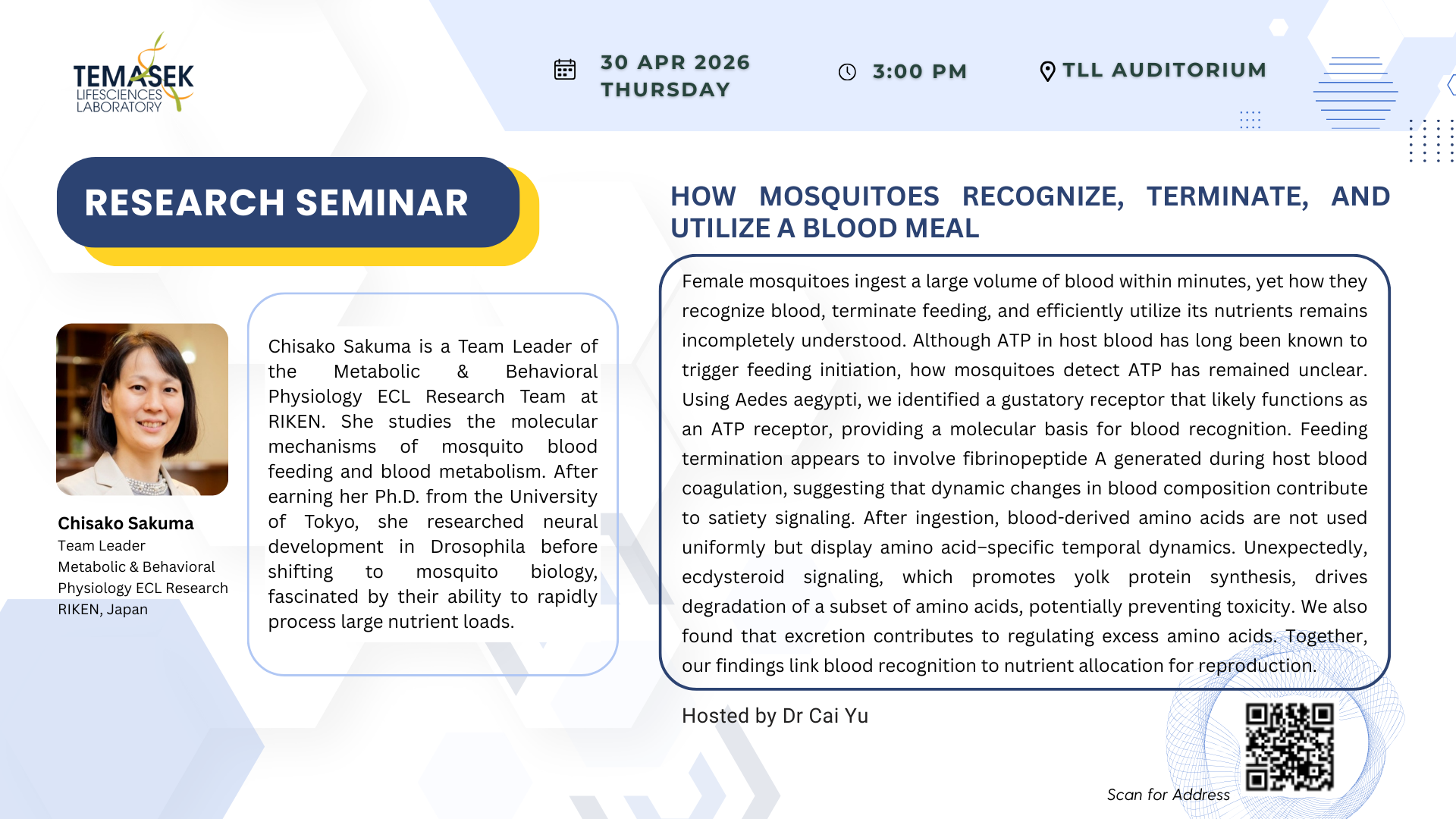
Female mosquitoes ingest a large volume of blood within minutes, yet how they recognize blood, terminate feeding, and efficiently utilize its nutrients remains incompletely understood. Although ATP in host blood has long been known to trigger feeding initiation, how mosquitoes detect ATP has remained unclear. Using Aedes aegypti, we identified a gustatory receptor that likely functions as an ATP receptor, providing a molecular basis for blood recognition. Feeding termination appears to involve fibrinopeptide A generated during host blood coagulation, suggesting that dynamic changes in blood composition contribute to satiety signaling. After ingestion, blood-derived amino acids are not used uniformly but display amino acid–specific temporal dynamics. Unexpectedly, ecdysteroid signaling, which promotes yolk protein synthesis, drives degradation of a subset of amino acids, potentially preventing toxicity. We also found that excretion contributes to regulating excess amino acids. Together, our findings link blood recognition to nutrient allocation for reproduction.
Speaker
Chisako Sakuma
Team Leader
Metabolic & Behavioral Physiology ECL Research
RIKEN, Japan
Chisako Sakuma is a Team Leader of the Metabolic & Behavioral Physiology ECL Research Team at RIKEN. She studies the molecular mechanisms of mosquito blood feeding and blood metabolism. After earning her Ph.D. from the University of Tokyo, she researched neural development in Drosophila before shifting to mosquito biology, fascinated by their ability to rapidly process large nutrient loads.